
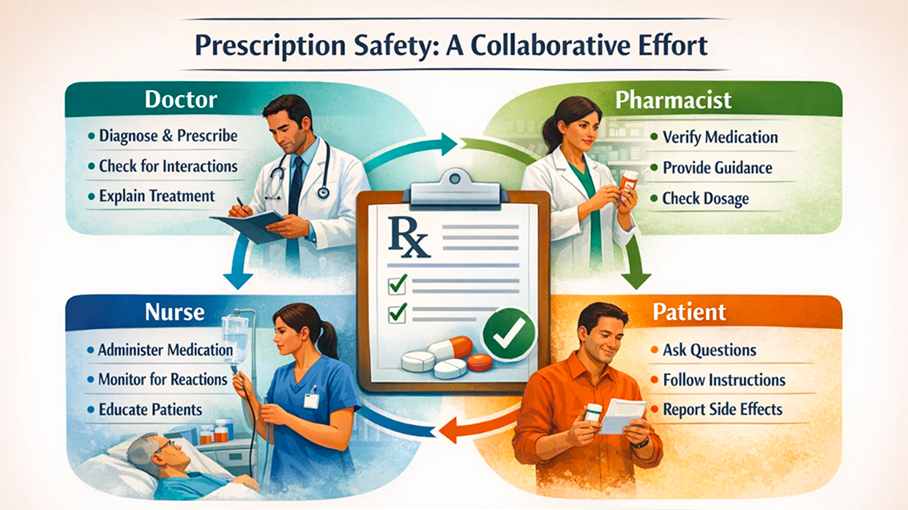
Prescription safety is a shared responsibility across the entire healthcare system, involving doctors, pharmacists, nurses, and patients. Each party plays a crucial role in ensuring that medications are safe, effective, and tailored to individual patient needs. From accurate diagnosis and prescribing by doctors to the vigilance of pharmacists, the monitoring of nurses, and the active participation of patients, working together can minimize the risks of medication errors and enhance patient outcomes.
Doctors as Gatekeepers: Ensuring Prescription Safety
Every prescription represents more than just a treatment—it is a critical decision in a patient’s journey toward better health. Doctors serve as the first line of defence, acting as gatekeepers to ensure that the medications they prescribe are safe, effective, and appropriate for each patient’s unique needs. However, safe prescribing extends beyond simply writing a prescription.
Safe prescribing starts with a thorough diagnosis and a deep understanding of a patient's medical history, including allergies, current medications, and potential drug interactions. Each patient responds differently to treatment, so it is essential to consider all details before making decisions that could have long-term impacts.
Once the prescription is made, communication becomes crucial. Doctors must take the time to explain the medication's purpose, dosage, timing, and possible side effects, ensuring that patients fully understand how to manage their treatment. This helps prevent misunderstandings that could lead to medication errors.
Prescription safety does not stop at the pharmacy. Continuous follow-up is key to assessing the medication's efficacy and monitoring for any adverse effects. This could be through regular check-ups, lab tests, or phone calls. Consistent follow-up allows doctors to make necessary adjustments and ensure that treatment remains safe and effective.
Key Steps to Prioritize Prescription Safety for Doctors:
- Accurate Diagnosis: Align the prescription with the patient’s diagnosis while considering their full medical history.
- Check for Drug Interactions: Review all current medications, supplements, and allergies to avoid harmful interactions.
- Communicate Clearly: Explain the medication’s purpose, proper usage, and potential side effects.
- Follow-Up: Regularly monitor the patient's response to the medication and address any side effects or concerns.
By prioritizing these steps, doctors not only improve patient outcomes but also contribute to safer healthcare practices.
Pharmacists: The Medication Experts and Last Dispensing Checkpoint
Pharmacists play a crucial role in ensuring prescription safety as the final checkpoint before a medication reaches the patient. They are medication experts responsible for verifying prescriptions, ensuring that they are appropriate, and providing critical information to both healthcare providers and patients.
Pharmacists often catch errors or potential issues that could have been missed during the prescribing process. They double-check prescriptions for possible drug interactions, ensure the correct dosage is prescribed, and verify that the medication aligns with the patient’s medical history.
In addition to verifying the prescription, pharmacists also play an essential role in patient education. They help patients understand how to take their medication correctly, including timing, possible side effects, and whether it should be taken with food or other medications. Their guidance can prevent common errors like skipping doses or taking incorrect amounts.
Pharmacists’ Key Contributions to Prescription Safety:
- Verifying Prescriptions: Double-checking for dosage accuracy, drug interactions, and patient allergies.
- Patient Education: Explaining how to take the medication, what to expect in terms of side effects, and any necessary precautions.
- Clarifying Doubts: Serving as a resource for both patients and doctors if questions arise about a medication’s appropriateness or safety.
By acting as a second line of defence, pharmacists significantly reduce the risk of medication errors and ensure that the patient has the knowledge to safely manage their prescriptions.
Nurses: The Last Line of Defence in Prescription Safety
Nurses are the final—and often most critical—line of defence when it comes to prescription safety. As the healthcare professionals who typically administer medication to patients, they play an essential role in verifying prescriptions, ensuring the right dosage, and monitoring for adverse reactions.
Their role goes beyond simply administering drugs. Nurses are responsible for ensuring that every detail of a prescription is accurate, and that the patient fully understands how to use their medication properly. Their attention to detail and vigilance significantly reduces the risk of errors, safeguarding patient health.
Nurses also serve as the first responders if something goes wrong. They monitor patients for allergic reactions, side effects, or possible drug interactions after medication is administered. Their ability to catch and address these issues quickly is vital to patient safety.
Nurses’ Key Roles in Prescription Safety:
- Verifying Prescriptions: Double-checking the doctor’s orders to ensure the medication, dosage, and timing are correct and suitable for the patient’s condition.
- Monitoring for Adverse Reactions: Closely observing the patient for any signs of allergic reactions, side effects, or interactions with other medications.
- Educating Patients: Helping patients understand how to take their medications correctly and what to expect in terms of side effects or outcomes.
- Advocating for Patients: Nurses can raise concerns if something does not seem right, whether it is a possible drug interaction or a patient’s doubt about their medication.
By being vigilant and informed, nurses serve as the last line of protection before medication is administered and remain critical in ongoing patient care.
Empowering Patients: How You Can Ensure Prescription Safety
Patients themselves play a vital role in ensuring their prescription safety. Prescription safety does not end when you leave the doctor’s office or the pharmacy—it is an ongoing process that requires active participation and attention.
Here’s how patients can take charge of their prescription safety:
- Ask Questions: Never hesitate to ask your healthcare provider questions about your medications. Understanding why you are taking a medication, how to take it correctly, and what side effects to watch for is crucial.
- Know Your Dosage: Be clear on the exact dosage and schedule. If anything is unclear, ask for clarification before you leave the office or pharmacy.
- Disclose All Medications: Inform your doctor and pharmacist about all medications you are taking, including over-the-counter drugs, supplements, and vitamins. This helps prevent dangerous drug interactions.
- Monitor Your Health: Track how your body responds to the medication. Report any unusual symptoms or side effects to your healthcare provider immediately.
- Follow Instructions Closely: Adhere to the instructions on how and when to take your medication. Whether it is taking it with food or at a specific time of day, following the instructions exactly as prescribed ensures that the treatment is effective and safe.
- Consult Your Pharmacist: If you have questions or concerns, do not hesitate to reach out to your pharmacist for advice. They are an invaluable resource in helping you manage your prescriptions safely.
When patients stay informed, ask questions, and actively monitor their health, they become key partners in ensuring their prescription safety.
Conclusion: A Collaborative Effort for Prescription Safety
Prescription safety is a shared responsibility that involves doctors, pharmacists, nurses, and patients working together to prevent medication errors and improve outcomes. Doctors act as gatekeepers, ensuring that prescriptions are safe and appropriate, while pharmacists verify and dispense medications, checking for interactions or errors. Nurses serve as the final line of defence, administering and monitoring medications with care and precision. Finally, patients, by staying informed and actively participating in their care, play an essential role in ensuring that medications are taken correctly and safely.
When all parties collaborate, the risk of medication errors decreases, and patient safety improves. Together, we can ensure that prescription safety remains a top priority in healthcare, leading to better outcomes for all.