
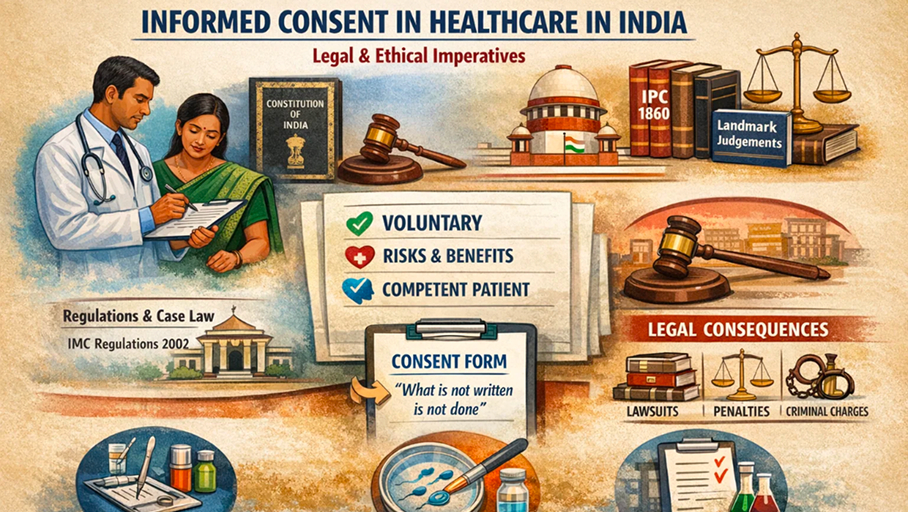
Informed consent is a critical legal and ethical component of healthcare in India, deeply rooted in medical ethics and reinforced by judicial precedents. As per the Indian Medical Council (Professional conduct, Etiquette and Ethics) Regulations, 2002, informed consent is mandatory before medical procedures, including surgeries, in-vitro fertilization, and artificial insemination. Consent must be voluntary, given by a competent individual, and based on adequate information about the procedure's nature, purpose, benefits, effects, complications, and alternatives.
The Legal Basis of Informed Consent
In India, informed consent is not just a medical ethic but a legal obligation. The principle stems from the right to bodily integrity and autonomy enshrined in the Constitution of India. The Supreme Court and various High Courts have, in numerous judgments, reinforced the necessity of informed consent.
The legal implications of informed consent in India are primarily governed by legislation, regulations, and case law. Informed consent is a critical aspect of healthcare practice, and healthcare professionals must be aware of the legal framework to ensure they are providing appropriate care and avoiding potential legal issues.
- Legislation: The Indian Penal Code, 1860, and various other laws provide the legal basis for informed consent. For instance, Section 304A of the Indian Penal Code deals with negligent homicide, which may be relevant in cases of medical negligence related to informed consent.
- Regulations: Indian Medical Council (Professional conduct, Etiquette and Ethics) Regulations, 2002. The Drugs Controller General of India (DCGI) has also issued guidelines for audio-visual recording of informed consent for clinical trials, which is mandatory in India.
- Case Law: The Indian judiciary has established the concept of "real or valid consent," which is based on the reasonable person standard rather than the average competent physician standard.
Landmark Judgements and their Implications
The practice of informed consent has also been shaped by landmark judgement from time to time.
One of the most significant cases in Indian legal history concerning informed consent is Samira Kohli vs Dr. Prabha Manchanda (2008). This case brought to light the nuances of informed consent and the repercussions of its breach. The ruling emphasized the need for explicit and specific consent for each medical procedure. It also clarified that consent obtained under duress or without adequate information is legally invalid.
Components of Legally Valid Informed Consent
Legally valid informed consent in India must include several key components:
- Voluntariness: Consent must be given voluntarily without any coercion.
- Capacity and Competence: The patient must be capable of making a decision, which implies being of legal age and sound mind.
- Prior Information: The patient must be provided with all relevant information, including the nature of the procedure, risks involved, alternative treatments, and the possible outcomes well before the procedure.
- Understanding: The healthcare provider must ensure that the patient comprehends the information provided.
Consent in Special Circumstances
- Minors: Consent should be obtained from parents or legal guardians.
- Emergency Situations: When immediate intervention is required to save a patient's life, consent might be implied or waived.
- Mental Incapacity: If a patient is unable to give consent due to mental incapacity, consent should be obtained from a legally authorized representative.
Documentation of Consent
Proper documentation of consent is critical in the legal context. It's not merely about getting a signature on a form but ensuring that the document accurately reflects the process of informed decision-making. The Supreme Court of India has underscored the importance of documentation, stating, "What is not written is not done."
Challenges in Implementing Informed Consent
Implementing informed consent in India comes with its own set of challenges. Cultural diversity, varying levels of literacy, and language barriers can complicate the consent process. Healthcare providers must navigate these challenges by simplifying medical jargon, using vernacular languages when necessary, and ensuring the patient's comprehension.
Consequences of Violation
- Legal Action: Healthcare professionals who violate informed consent laws may face legal action, including disciplinary actions, fines, or even imprisonment in severe cases.
- Civil Lawsuits: Patients may file civil lawsuits against healthcare professionals for breach of informed consent, seeking damages for physical, emotional, and financial harm.
- Criminal Charges: In some cases, violations of informed consent may constitute criminal offenses, such as battery or assault, depending on the severity of the violation.
- Reputational Damage: A violation of informed consent can lead to significant reputational damage for healthcare professionals, potentially affecting their ability to attract patients and maintain their professional standing.
- Ethical Concerns: Violating informed consent can also have ethical implications, as it may undermine the trust and confidence that patients place in the healthcare system and their healthcare providers.
Best Practices for Healthcare Professionals
To mitigate legal risks and ensure ethical practice, healthcare professionals should:
- Provide comprehensive and understandable information to patients.
- Take time to answer all questions and clear doubts.
- Ensure documentation is thorough and reflects all elements of informed consent.
- Be mindful of patients' rights to refuse or withdraw consent at any time.
- Regularly update knowledge and training on legal aspects of informed consent.
The Role of Institutional Policies
Hospitals and healthcare institutions play a crucial role in framing policies that guide the informed consent process. These policies should align with legal requirements and ethical standards and should be regularly reviewed and updated.
In summary, the legal landscape of informed consent in India is robust, with general principles supported by specific guidelines for various medical procedures. However, challenges in practical implementation persist, necessitating continual awareness and adaptation among healthcare providers.