
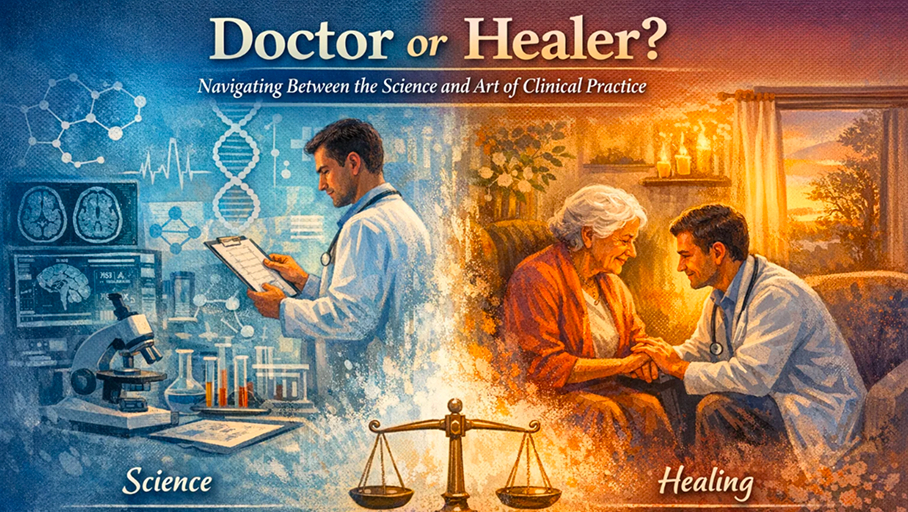
Last week, one of my friends brought her 89-year-old grandmother to my clinic. She had complaints that warranted invasive investigations. She came across as a strong woman and made it clear to me that she had no intentions to get admitted into a hospital either for testing or for treatment! Whenever such a patient walks through the door, I tend to change my hat from being a doctor to a healer! Let me clarify what I mean by the word “healer”: A healer is a person who seeks to cure diseases by means other than conventional medical treatment.
I believe that in situations like these, it is crucial to approach the patient with empathy and understanding. It is important to respect their wishes while also ensuring that they receive the care and attention they need. As a healer, my focus shifts from just treating the physical symptoms to providing comfort, support, and reassurance to the patient and their loved ones. It becomes a delicate balance of medical expertise and emotional support, creating a safe space for the patient to feel heard and valued. In the end, it is not just about the treatment but about the overall well-being and dignity of the individual.
I am a doctor trained to use the scientific approach to dissect clinical problems systematically, look at the evidence-base, to arrive at the best available treatment options. But every now and then, there comes a patient when you need to step back and glimpse at the human being rather than the problem or disease.
It is in those moments of connection that the true essence of medicine shines through. Beyond the lab results and medical jargon, there lies a person with a unique story, fears, and hopes. As healthcare providers, we have the privilege of not only treating illnesses but also offering compassion, understanding, and empathy. It is in these moments of humanity that we truly make a difference in someone's life.
Clinical practice is not all science; equally important is the art of medicine. Just as a musician creates a beautiful experience, we try our best to create an experience amidst disease and pain. This experience may not be enjoyable, but we are satisfied if it is soothing to the patient and family. Just as each artist expresses her own personality and being in her creation, each clinician by his approach, creates a unique patient’s experience.
Just as a painter uses assorted colours to evoke emotions, clinicians utilize their skills and compassion to bring comfort and healing to those in need. The art of medicine lies in the ability to listen, to empathize, and to understand not just the symptoms, but the person behind them. It is in these moments of connection and understanding that healing truly begins. Each patient encounter is a blank canvas waiting to be filled with empathy, kindness, and hope. As clinicians, we strive to paint a picture of care and support, leaving a lasting impression that goes beyond the treatment itself. Just as a masterpiece can move the soul, our interactions with patients have the power to touch hearts and transform lives. The art of medicine is not just about curing ailments, but about nurturing the human spirit and fostering healing in its truest sense.
How should we approach such patients? These are grey areas in clinical practice, and you cannot find answers to this question in textbooks or scientific journals. It is learnt from mentors and from careful observation of innumerable human conditions. In our practice we are privileged to witness the emotional upheavals, insecurity of life and the certainty of death. In and through all these, we learn the art of listening, appreciation of inner fears, and sharpen our “soft skills,” ever careful not to abandon the process of scientific inquiry.
When faced with such patients, it is essential to have an individualised approach. Understanding that each individual is unique and may require a different approach is crucial in providing the best care possible. By observing and learning from experienced mentors, as well as from our own experiences, we can develop the ability to listen attentively, understand their fears, and offer support in a way that is both scientifically sound and emotionally sensitive. It is through this delicate balance of science and empathy that we can truly be effective in the lives of those we care for.
I am not for a moment suggesting that doctors become wayside dealers peddling false hopes and magical cures; but as clinicians we should strive to create a magical experience with a sympathetic heart and an empathetic approach to be true companions for our patients in their journey through disease and suffering.
Rather than simply focusing on the clinical aspect of treatment, we should aim to provide an integrated approach that considers the emotional and psychological well-being of our patients. By cultivating empathy and showing genuine care for their journey, we can establish a strong sense of trust and support. This approach not only enhances the patient experience but also contributes to better health outcomes by fostering a positive and healing environment. Let us strive to be more than just doctors or healers, but true companions on the path to wellness.