
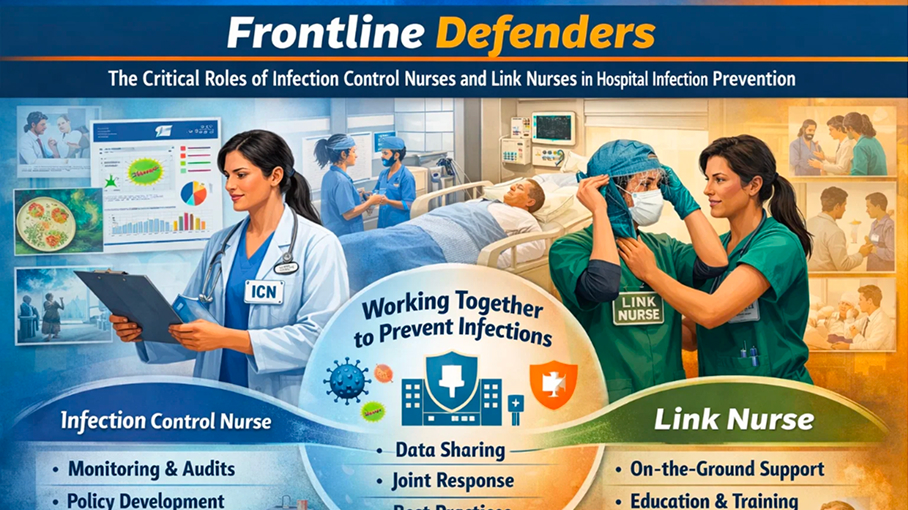
Infection prevention is a cornerstone of patient safety in healthcare settings, especially as hospitals face ongoing challenges such as healthcare-associated infections (HAIs) and emerging infectious diseases. Two key players in this crucial work are Infection Control Nurses (ICNs) and Link Nurses. These specialized nurses work tirelessly to safeguard both patients and healthcare staff by implementing and maintaining infection control measures at every level of the healthcare system.
While ICNs manage infection control policies and protocols across hospital systems, link nurse ensure those practices are carried out effectively on the frontlines. Together, they form a powerful team in the battle against infections, saving lives and maintaining the integrity of healthcare environments.
Infection Control Nurses (ICNs): The Strategists of Infection Prevention
At the core of infection prevention efforts in hospitals, Infection Control Nurses (ICNs) are responsible for developing, monitoring, and updating infection control policies. Their role goes beyond mere oversight—they work to anticipate potential infection risks, design strategies to prevent them, and ensure that the entire hospital is aligned with the latest standards in infection prevention.
ICNs are responsible for:
- Monitoring and Tracking Infections: ICNs collect and analyse data on infection rates, looking for trends that may indicate outbreaks or areas where infection control measures need to be strengthened. This data-driven approach allows hospitals to quickly respond to infection threats and implement targeted prevention strategies.
- Developing and Updating Policies: Infection control policies must be regularly reviewed and updated to reflect the latest research and best practices. ICNs are responsible for keeping these protocols current and ensuring that all staff are aware of and comply with them.
- Training Healthcare Staff: ICNs lead education and training programs for healthcare workers, ensuring they understand the importance of infection control measures such as proper hand hygiene, the use of personal protective equipment (PPE), and sterilization procedures.
- Conducting Audits: Regular audits of infection control practices help ensure that all departments are adhering to safety standards. ICNs conduct these audits, identify areas of concern, and work with staff to correct any lapses.
Their proactive efforts are essential for reducing HAIs, which affect approximately 1 in 31 hospital patients daily, according to the CDC. By identifying and mitigating infection risks early, ICNs play a crucial role in maintaining a safe healthcare environment.
Real-World Example:
Consider a scenario in a surgical unit where an increase in post-operative infections is detected. The ICN conducts a thorough review of sterilization procedures and discovers lapses in equipment cleaning protocols. By addressing the issue swiftly and implementing new cleaning guidelines, the ICN prevents further infections and protects future patients from harm.
Link Nurses : Infection Prevention Champions on the Frontlines
While ICNs oversee infection control at a systemic level, Link Nurses are embedded in individual hospital departments, where they serve as infection control champions on the ground. Link nurses act as the critical link between the infection control team and their departments, ensuring that infection prevention protocols are understood and implemented correctly by all staff members.
Link nurses contribute to infection control by:
- Providing On-the-Ground Support: Link nurses work directly with their colleagues in real time, offering immediate guidance on infection control practices during shifts. This hands-on support ensures that infection prevention is maintained even in fast-paced, high-pressure environments.
- Identifying and Addressing Risks Early: With their specialized infection control training, link nurses are highly attuned to potential infection risks. Whether it is improper PPE use, inadequate sterilization, or missed hand hygiene, link nurses are quick to identify risks and take corrective action before they escalate.
- Training and Educating Staff: Link nurses conduct department-specific training, helping their colleagues stay up to date with infection prevention protocols. By providing this ongoing education, link nurses ensure that infection control becomes a routine part of everyone’s daily practice.
- Promoting a Culture of Safety: Link nurses play an important role in fostering a workplace culture where infection control is prioritized. As infection control ambassadors, they encourage their colleagues to uphold high standards of hygiene and safety, creating an environment where patient care and staff safety go hand-in-hand.
Real-World Example:
In a busy emergency department, a link nurse notices that PPE is not being changed between patient visits as required. The link nurse steps in, provides real-time feedback, and reinforces the importance of proper PPE use. By correcting this practice, the link nurse helps prevent the potential spread of infection between patients and ensures that healthcare workers remain protected.
Collaborative Efforts Between ICNs and ICLNs
While ICNs and link nurses have distinct roles, their work is deeply interconnected. ICNs rely on link nurses to ensure that infection control policies are effectively implemented in every department, while link nurses depend on ICNs for guidance and updates on best practices.
Together, they form a powerful team dedicated to preventing infections and ensuring patient safety. Their collaboration is particularly crucial in high-risk environments, such as intensive care units (ICUs), surgical wards, and emergency departments, where the risk of infection is often elevated.
Examples of Collaboration:
- Data Sharing: ICNs may identify infection trends through data analysis and work with link nurses to implement targeted interventions in specific departments where infection rates are higher.
- Joint Training Initiatives: ICNs and link nurses frequently collaborate on training programs to ensure that all hospital staff are aware of the latest infection prevention protocols and are empowered to follow them.
- Response to Emerging Threats: In the event of a new infection risk—such as an outbreak of a drug-resistant bacteria—ICNs and link nurses work together to develop and roll out response strategies quickly, ensuring that every department is prepared to handle the threat.
Challenges Faced by ICNs and Link Nurses
While these nurses play a vital role in maintaining infection control, they often face significant challenges. ICNs are tasked with keeping infection control policies up to date in a rapidly evolving healthcare landscape, where new threats, such as antibiotic resistance or emerging infections, require constant vigilance. Limited resources and staffing shortages can also make it difficult for ICNs to implement and enforce infection control measures across large, busy hospitals.
Link nurses on the other hand, must balance their infection control responsibilities with their clinical duties, which can be particularly challenging in departments where staff are already stretched thin. In some cases, link nurses may encounter resistance from colleagues who are unfamiliar with the latest infection control protocols or who feel overwhelmed by the additional precautions.
Addressing these challenges requires ongoing support from hospital leadership, including ensuring that ICNs and link nurses have access to sufficient resources, training, and staffing to perform their roles effectively.
Conclusion: The Essential Roles of Infection Control Nurses and Link Nurses
Infection Control Nurses (ICNs) and Link Nurses are essential to the smooth functioning of healthcare systems, playing vital roles in maintaining infection prevention protocols and safeguarding patient safety. While ICNs develop and oversee infection control policies, link nurses ensure that these policies are implemented effectively on the frontlines.