
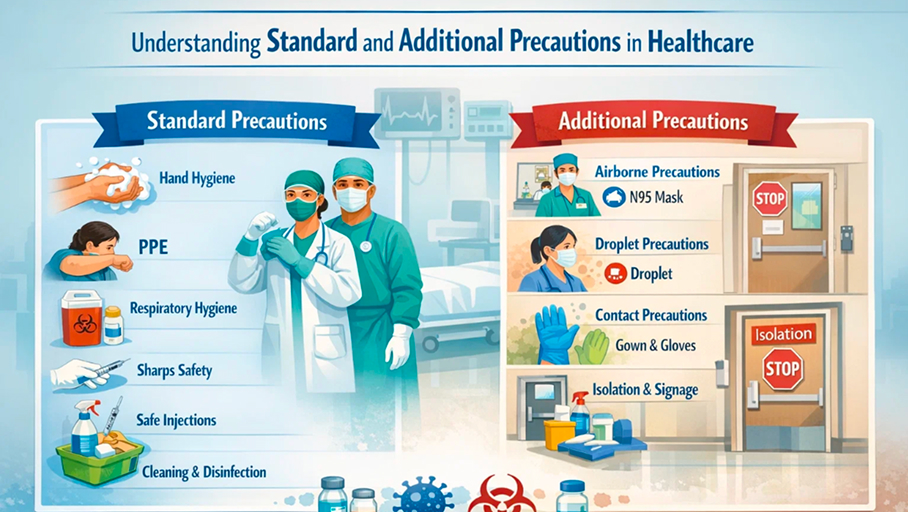
In the healthcare setting, the primary defense against the spread of infectious diseases are standard precautions. These are a set of infection control practices used to prevent transmission of diseases that can be acquired by contact with blood, body fluids, non-intact skin and mucous membranes. The underlying principle of standard precautions is to consider every person potentially infectious, unless proven otherwise. Standard precautions are applied to every patient, regardless of diagnosis or presumed infection status.
What are standard precautions?
Standard precautions consist of several components, including:
- Hand Hygiene: This is the most important and effective measure to prevent the spread of pathogens. It involves washing hands with water and soap or using a hand sanitizer if soap is not available.
- Personal Protective Equipment (PPE): This includes gloves, gowns, masks and eye protection. PPE is used to create a barrier between the healthcare worker and the infectious agent, thereby reducing the risk of transmission.
- Respiratory Hygiene: This involves covering the mouth and nose during coughing or sneezing, using tissues or the elbow, followed by hand hygiene.
- Sharps Safety: Safe handling and disposal of sharps (e.g., needles, blades) can prevent injuries and potential exposure to infection.
- Safe Injection Practices: These practices are intended to prevent transmission of infectious diseases between one patient and another or between a patient and healthcare provider.
- Cleaning, Disinfection and Sterility: Regular cleaning, disinfection and sterilization of patient-care equipment and environment can also prevent the spread of infectious agents.
Understanding Additional Precautions
In addition to standard precautions, there are circumstances when additional precautions are required. These are extra measures to prevent the spread of certain infectious diseases and are based on the method of transmission (airborne, droplet or contact). Additional precautions are used when caring for patients with known or suspected infections that spread in a manner which is not effectively contained by standard precautions.
Components of additional precautions include patient placement, proper signage, restriction of visitors and consideration of high-risk areas. They also emphasize the need for staff safety, including proper use of personal protective equipment and vaccination.
Body Substance Isolation and Universal Precautions
Body substance isolation is a part of standard precautions. It is a preventive measure against low-risk body fluids such as urine, feces, sputum and vomitus. On the other hand, universal precautions is an older terminology that was primarily designed to prevent the transmission of blood-borne pathogens, especially HIV and Hepatitis B virus. It also pertains to high-risk body fluids such as cerebrospinal fluid, pleural fluid, pericardial fluid, peritoneal fluid, semen and vaginal secretions.
Today, the term "Standard Precautions" is preferred over "Universal Precautions" and "Body Substance Isolation", as it more accurately represents the comprehensive approach to infection control.
In conclusion, understanding and adhering to standard and additional precautions is vital in maintaining a safe healthcare environment. These practices protect both patients and healthcare workers from potential infection, ensuring that the best possible care is provided.