
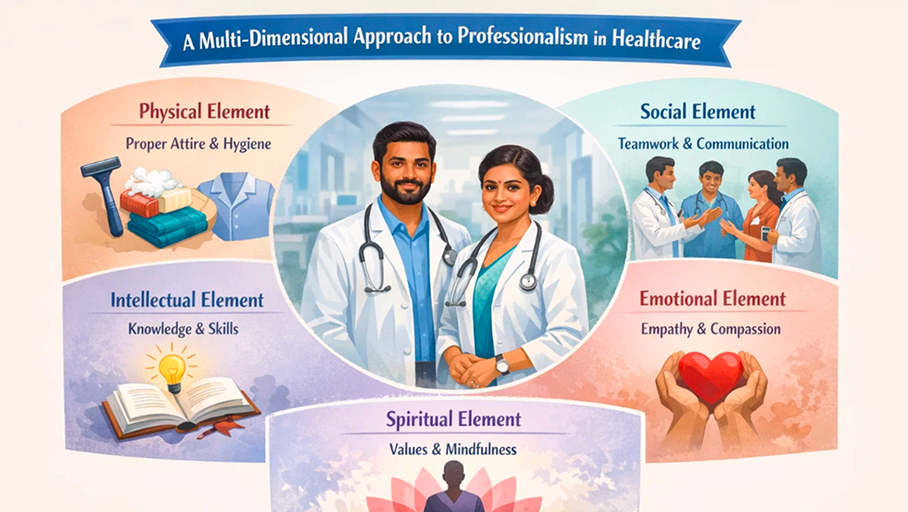
Professionalism is not merely about the skills we possess. It is about our attitude, behaviour, and the way we present ourselves in the workplace. It is about integrating every element of ourselves - physical, intellectual, emotional, social, and spiritual - into a harmonious whole. This blog post will explore each of these elements and show how we can cultivate them to enhance our professionalism.
The Physical Element of Professionalism
The physical element of our professionalism is about presenting oneself in a way that is appropriate and respectful in the workplace. This includes aspects like personal hygiene, dress code and ensuring our physical well-being.
Etiquette
Professional appearance is an essential part of workplace etiquette. It includes maintaining naturally occurring hair colour, for men, keeping the beard and moustache short, clean, and neatly trimmed and for women, maintaining the hair in a professional manner. Fingernails should be short and not seen over fingertips. Jewellery should be kept minimal; a plain wedding band and wristwatch can be worn. Both strong perfumes and body odour should be avoided. Dress code should be followed as per the organization's policy.
Physical Well-being
Physical well-being is crucial for maintaining energy levels and focus while working. Regular exercise, monitoring your weight, wearing comfortable footwear, eating a healthy diet, and getting adequate sleep are some of the best practices to ensure a healthy wellbeing.
The Social Element of Professionalism
A professional is someone who can work efficiently in a team and communicate effectively. To be a good team player, one needs to listen attentively to others, be reliable and consistent, be proactive in taking initiatives and respect other’s viewpoints.
The ability to collaborate and connect with others is an essential element of professionalism in any workplace. By fostering positive relationships and open communication within a team, individuals can enhance productivity and achieve common goals more effectively. Being receptive to feedback, offering support to colleagues, and valuing diverse perspectives are key components of being a successful team player. Embracing these social aspects of professionalism not only strengthens teamwork but also builds a positive work environment where everyone feels valued and motivated to contribute their best.
Communication
Effective communication is a crucial part of professionalism. It involves choosing the appropriate type and tool of communication for different situations. For instance, some situations may require written communication, while others may be best dealt with verbally. In healthcare settings, clear and concise communication is key to avoiding errors and patient harm. Communication tools like GREET/ISBAR can be useful in structuring communication. Phone communication involves following proper etiquette and using read back technique.
The Intellectual Element of Professionalism
Intellectual aspect of professionalism involves being a lifelong learner and being open to change. We should be adaptable, resilient, and always strive to stay relevant in our field.
When we understand the importance of being lifelong learners, we continuously seek out opportunities to expand our knowledge, through formal education, workshops, or self-directed study. By embracing a "beginner's mind," we can approach new challenges with curiosity and a willingness to learn from every experience.
Being open to change is also crucial in the intellectual element of professionalism. The world is constantly evolving, and we must adapt to recent technologies, trends, and ways of thinking. This makes us resilient in the face of setbacks, and we can use each obstacle as an opportunity for growth and improvement.
As professionals, we should stay relevant in our field by keeping up with the latest research, best practices, and industry developments. This enables us to provide the highest level of service to our patients. By embracing a mindset of continuous learning and growth, professionals can thrive in an ever-changing professional landscape.
The Emotional Element of Professionalism
The emotional component of professionalism involves having empathy for others. Professionals should strive to take the patient’s perspective, withhold judgment, and consider the patient’s emotions in all interactions.
By demonstrating empathy, professionals can create a more compassionate and supportive environment for their patients. This emotional element of professionalism not only helps build trust and rapport, but also contributes to better outcomes and overall patient satisfaction. It is essential for professionals to recognize and validate the emotions of those they serve, acknowledging the impact that illness or injury can have on an individual's mental well-being. By approaching each interaction with understanding and kindness, professionals can truly make a difference in the lives of those they care for.
The Spiritual Element of Professionalism
The Spiritual aspect of professionalism is about aligning our professional behaviour with our core values. Having the integrity to be true to our core values is supremely important for patient care. This is what Mahatma Gandhi referred to when he said, "When what I think, what I say and what I do are in harmony." It involves maintaining integrity and placing the interest of patients above your own.
By embodying spiritual professionalism, healthcare providers can create a nurturing and healing environment for patients. This approach goes beyond just technical skills and knowledge; it emphasizes the importance of empathy, compassion, and respect in all interactions.
When healthcare professionals prioritize the spiritual element of professionalism, they not only enhance the quality of care they provide, but also foster a sense of trust and connection with their patients. Patients feel valued and supported when they sense that their healthcare provider is not only skilled but also genuinely cares about their well-being.
In essence, integrating spirituality into professionalism allows healthcare providers to treat the whole person - mind, body, and spirit. It is a powerful way to bring humanity and compassion back into healthcare, ensuring that patients receive not only treatment for their physical ailments but also comfort for their soul.
Implementing the Best Practices: The ARISE Model
Based on this integrated approach to professionalism, I have created the “ARISE” model to remind us of the various aspects of professionalism. It is a useful framework for implementing these best practices. It stands for:
- A - Altruistic (patient first, always!)
- R - Respect (for others and to gain respect from others)
- I - Integrity (align to your true north)
- S - Service (with empathy and compassion)
- E - Excellence (By being a lifelong learner, be open to change)
Learning Best Practices
Best practices can be learned from experience, by watching others, by practice and by continuous education. Professionals in healthcare can benefit greatly from observing and learning from their colleagues who exhibit exceptional professionalism in their work. By emulating these role models, one can develop a deeper understanding of the core values and ethics that are essential in the healthcare field.
Additionally, engaging in continuous education and training programs can help healthcare professionals stay updated on the latest standards and practices, ensuring they provide the highest quality of care to their patients. Remember, professionalism in healthcare is not just about skill and knowledge, but also about empathy, integrity, and a commitment to ethical conduct.